Racine, WI · Garage Door Service
Why So Many Racine Garage Doors Have No Insulation at All
Racine's housing stock dates mostly from 1957 to 1994, a run of construction that predates modern garage door insulation standards, and the cold moderate climate here exposes that gap fast.
- Repairs & new doors
- Springs & openers
- Serving 4 nearby communities
How Local Conditions Play In
Racine's housing stock mostly went up between 1957 and 1994, with the median build year sitting around 1975. That's a long run of construction, and across the 18 named areas that make up this service area, the bulk of what's actually on the ground is 1960s and 70s stock. Doors from that era were built to keep rain and raccoons out, not to hold heat in. Insulation requirements for garage doors weren't part of the picture yet, so a huge share of the original doors in this area are a single layer of steel over an air gap, nothing more.
That matters here specifically because Racine sits in a cold moderate climate band. A door with no insulating core does fine in a mild climate where the garage never gets much colder than the outside air. Here, that same door becomes a sheet of steel transferring outside cold straight into the garage, and often straight into whatever wall shares space with the house. If your attached garage runs noticeably colder than the rest of the house in January, the door itself - not just the weatherstripping - is usually part of why.
The Problem
An uninsulated door on a house from this build era does a few predictable things once the cold sets in. The steel skin contracts, which can make panels feel tighter in their tracks and roll stiffer than they did in October. Condensation forms on the inside face when warm garage air meets cold steel, and that moisture works on hardware, hinges, and the bottom seal over years, not days.
The bigger issue is usually heat loss into the house, not damage to the door itself. If the garage sits under a bedroom or shares a wall with a living space, an original single-layer door from the 1960s or 70s is one of the largest uninsulated surfaces in the building envelope. Homeowners sometimes chase the symptom - a cold room, a drafty laundry nook - for a season before anyone looks at the door itself as the source.
We'll say plainly: not every door from this era needs to come out. A door that still seals well, tracks straight, and isn't rusted through can sometimes be helped with weatherstripping and a bottom seal upgrade rather than a full swap. It's worth having someone look at the actual panel condition before assuming replacement is the only answer.
What To Look At First
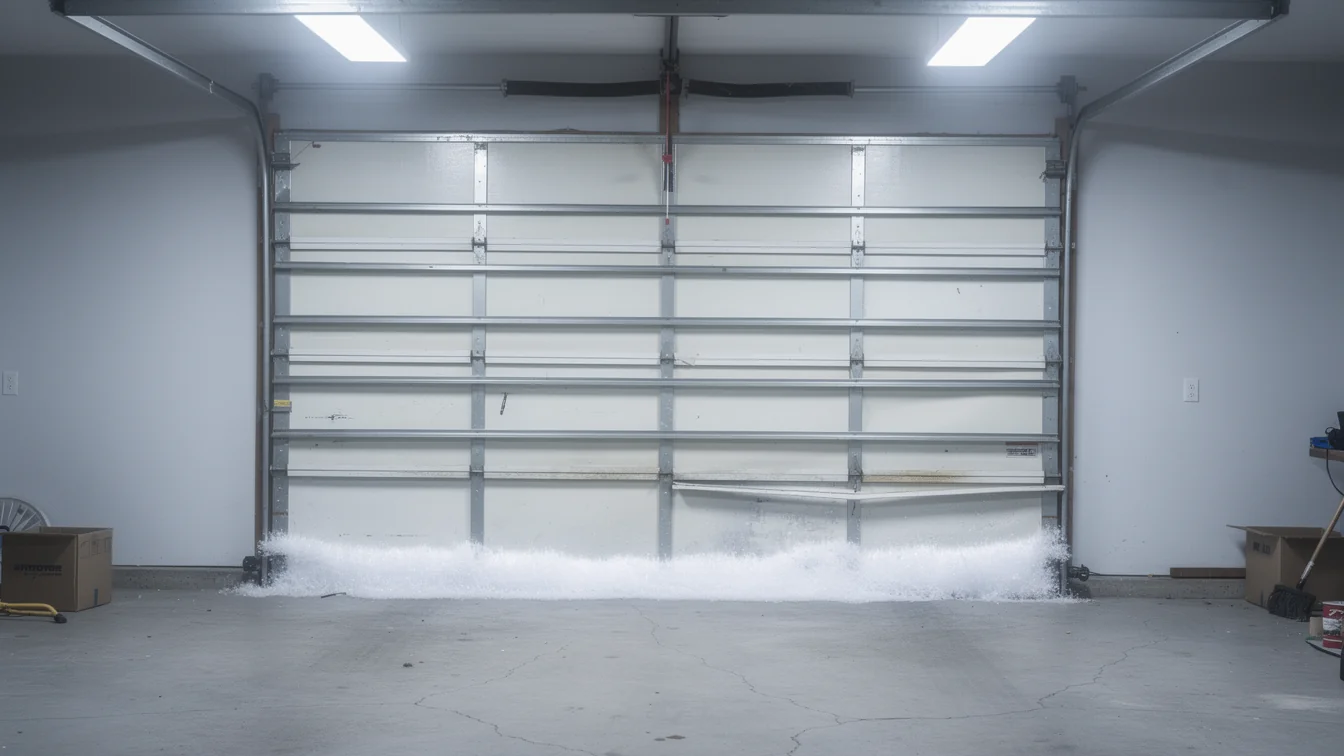
Start with the panel construction. Knock on the door - a hollow, tinny sound usually means single-layer steel with no insulation. A door with foam core insulation sounds and feels different, more solid, heavier to lift by hand.
Next, check the bottom seal and the weatherstripping along the sides and top. On houses from the 1957-1994 build range, original seals are often long past useful life even if the panels themselves are fine. A worn seal lets cold air and moisture in regardless of what's insulating the panel.
Look at the tracks and rollers too. Cold makes old grease stiffen and metal contract slightly, so a door that rolls fine in summer can bind or jump in a track come deep winter - a sign of wear that the cold is exposing, not causing. If you see rust at the bottom corners of the panels, that's usually moisture that's been sitting there a while, often tied to a seal that stopped doing its job years ago.
What You Pay
We don't have a flat number to hand you here, because the right fix depends on what we actually find - a seal and weatherstripping job is a different scope than swapping an uninsulated single-layer door for an insulated one. What we can tell you is what drives the decision: panel condition, whether the garage shares a wall with living space, and how much of the original 1960s-70s hardware is still in play.
Given that median household income across the service area runs around $90,621 and there are roughly 55,144 owner-occupied houses here, we see a wide mix of people choosing a targeted seal repair over a full door replacement, and plenty going the other way once they see what a bare steel panel is actually costing them in heat loss. Neither choice is wrong on its own - it depends on the door in front of us.
Frequently asked questions
Does my garage door actually need insulation if the garage is detached?
Less urgency there. Insulation matters most when the garage shares a wall or ceiling with heated living space, which is common in the attached-garage layouts typical of Racine's 1960s and 70s housing stock. A detached garage with an uninsulated door is still colder in winter, but it isn't pulling heat out of your house directly.
How do I know if my door is original to the house?
If your house was built in the 1957-1994 range common across this area and the door has never been replaced, a hollow sound when you knock on it and a lack of any foam backing visible from inside are good signs it's original single-layer steel, not an insulated retrofit.
Is weatherstripping enough, or do I need a new door?
Depends on the panel. If the steel is solid and not rusted through, new weatherstripping and a bottom seal can cut a lot of the draft without replacing the door. If the panel itself is uninsulated and the garage shares a wall with living space, weatherstripping alone won't solve the heat loss.
Related garage door services in Racine
More garage door guides
Book garage door service in Racine
Call now or request a quote - tell us what the door is doing and where you are.